One of my favorite songs is an 80s ballad entitled “Total Eclipse of the Heart” sung by Bonnie Tyler. It has that perfect blend of drama, belting, crashing drums, angelic choirs, and (if you’ve seen the music video) big hair. The lyrics for the first verse read-
“Every now and then I get a little bit lonely
And you’re never coming ’round
(Turn around) every now and then I get a little bit tired
Of listening to the sound of my tears
(Turn around) every now and then I get a little bit nervous
That the best of all the years have gone by
(Turn around) every now and then I get a little bit terrified
And then I see the look in your eyes
(Turn around, bright eyes) every now and then I fall apart
You can interpret the lyrics in any way you want, but what I hear is a desperate, sad woman pleading for the person she loves to turn towards her. As I read this week about the importance of turning toward one another in marriage, I couldn’t help but think of this song. So how do we avoid “eclipses of the heart” in our marriages?
In one of my classes, we are learning about the importance of quality caregiving when babies are young. Essentially, this means that an infant’s needs are met promptly, consistently, and appropriately (meaning the response actually matches what they need). I am of the opinion that adults need that same quality of care in their marriages!
How do we do this? Adults are a little more complicated than babies- their needs generally go beyond a desire to be held, fed, or have their diaper changed. However, don’t be overwhelmed! Remember this scripture from Doctrine and Covenants 64:33.
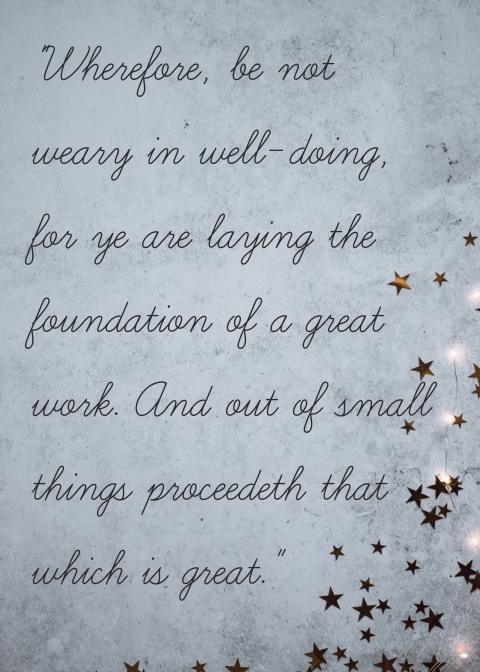
Essentially, what we learn from this scripture is that it is the small, daily efforts that make a difference and can transform a marriage. According to John Gottman, as couples turn towards one another, they build mutual trust. By consistently responding to one another’s needs, they show that they value their marriage and that they are truly present. As I pondered this, I thought about the people I love and the little things we do for each other to show love and build trust. Just a warning, these are very random examples. They include:
- Calling each other on the phone daily (and always ending with an “I love you”). Frankly, the number of times a week I call my family is a little embarrassing. However, as they answer the phone and listen to me vent about my day, my need for connection is met.
- Reading books together. My dad and I are HUGE book nerds, and each month, we choose a book to read and discuss. As we talk about the things we loved, and the things we hated, we grow closer together.
- When my roommate or I am incredibly stressed with school, we will take a little break and go to the grocery store together. It is such a simple thing, but it gives us a moment to relax. And to buy chocolate and Diet Coke, which are therapeutic and essential.
- My cousin and I are both single, and a little bitter. About once a week, we have a venting session where we talk about how much we want to be dating. We complain together, we laugh together, and by the end, we both feel better.
What about those times when our spouse (or if you aren’t married, friends and family) seem to be turning away from us? What do we do when we feel alone, or like we are putting more effort into a relationship than the other person? Instead of singing an emotional ballad like “Total Eclipse of the Heart”, I have a few suggestions for these situations.
First, look for the things that you have the power to change. According to H. Goddard, “As we turn from the ways of the natural man to the ways of Christ, we will respond to our challenges differently. Instead of judging our partner, we will invite Christ to soften our hearts and fill us with goodness. No challenges or differences in marriage can thwart the work of god-given charity.” There have been so many times when I have felt that someone else is letting me down, only to realize after some pondering that I am the one letting them down.
Second, trust in the Savior and rely on Him. He is always there for us, even when we feel alone. Often, the times when I feel the most distance from other people are actually the times that I am the most distant from my Savior. This leaves me feeling empty, and looking for other people to fill the hole. They can’t, but Christ can. As David A. Bednar said, “I wonder if we ever learn to acknowledge our daily dependence upon the enabling power of the Atonement” (p. 62).
Third, search for shared meaning with the other person. One great way to do this is through connection rituals. For instance, my dad and step-mom go on a weekly date. Regardless of how hard the week has been, they can rely on that regular event to renew their marriage and add meaning.
The little things will add up. I’ve seen it in my own relationships and in my life in general. I wasn’t going to share this, but I feel that I should. During my high school years, my mom and I had a really difficult relationship for a variety of reasons. Eventually, I moved in with my dad and stayed with him until I left for college. It seemed to me that my mom and I would never, ever heal from the things that had been said and done during adolescence.
However, two years into college, I broke my hip. I couldn’t put weight on my hip for four months, and I had to leave school so that someone could help take care of me. I was not excited. In fact, I cried the whole 5 1/2 hours home. I knew this meant living with my mom, and I just couldn’t handle that. However, during those four months, our relationship totally changed. Each day, she sacrificed to meet my needs. She helped me do all the things I could no longer do by myself. Each time I asked for help, she turned towards me.
I did very little to help our relationship, but her efforts made all the difference. That experience was a testament to me that when someone chooses to sacrifice for another person, and consistently turn towards them, relationships can be transformed.
 Eternity Means Forever